Introduction: Based on multiple user tests and standardized stress tests, this article focuses on “Is the quality of Korean VPSs good? Their performance under high-concurrency scenarios.” The article focuses on network latency, throughput capacity, CPU and disk I/O, concurrent connection handling, and availability, to help decision-makers make more informed choices.
To ensure the credibility of the conclusions, tests covered multiple routes to Korean nodes, different concurrency levels (from hundreds to tens of thousands of concurrent connections), TCP/HTTP stress testing, as well as the collection of common monitoring metrics. The metrics include average latency, packet loss rate, bandwidth utilization, CPU and disk I/O usage, as well as error rates, to closely replicate the actual online environment.
Overall, Korean VPS It maintains low network latency and stability when accessing from within the country or neighboring countries. Under high concurrency, latency fluctuates as the number of connections increases. Jitter and very few packet losses during sudden peaks are common phenomena; CDN or load balancing is needed to mitigate the impact on applications with high real-time requirements.
In terms of bandwidth utilization, Korean VPSs usually provide consistent throughput, but short-term spikes in traffic may be limited by upstream constraints or shared links. As the number of concurrent connections increases, bandwidth utilization rises. Without proper throttling or traffic management strategies, throughput stability decreases, affecting response times under high concurrency.
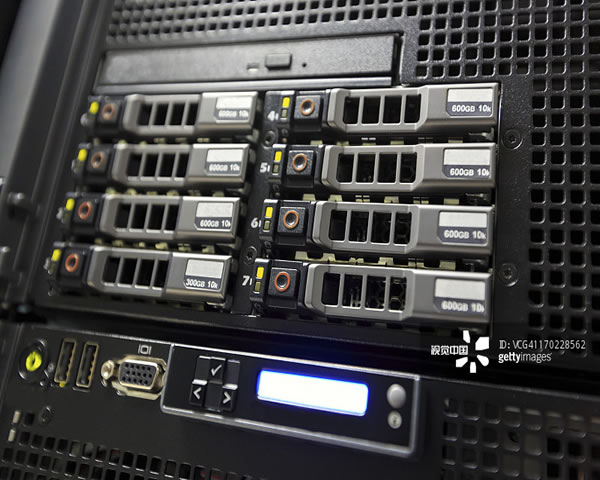
CPU and disk I/O are key factors affecting concurrent processing capabilities. Tests show that in high-concurrency scenarios, if an application is I/O-intensive, it is more likely to encounter disk latency bottlenecks ; CPU-intensive tasks can cause slower responses or request queuing when overloaded; it is recommended to prioritize attention to instance specifications and IO performance settings.
Korean VPSs show significant differences in concurrent connection management: Small-scale instances have a higher probability of connection timeouts or failures when maintaining connections and handling concurrent bursts. Concurrency processing efficiency and reliability can be significantly improved through techniques such as connection pooling, long connection reuse, and reverse proxies.
In terms of availability, Korean VPSes are related to the geographical characteristics of cloud platforms. A single-node failure can affect availability. It is recommended to use multi-availability zone or multi-node redundancy, along with automated health checks and rapid failover strategies, to maintain high service continuity during high-concurrency incidents.
Regarding “Is the quality of Korean VPS good? How does it perform under high-concurrency scenarios?”, here are some suggestions: Evaluate network links and bandwidth, select appropriate instance specifications, implement proper connection and resource throttling, integrate CDN/load balancing, configure monitoring alerts and auto-scaling strategies to ensure smooth operation during peak times.
Conclusion: Korean VPSs can provide good network and performance in most scenarios. However, in high-concurrency environments, it is still necessary to comprehensively evaluate instance specifications, IO capabilities, and network links, and combine them with architectural optimizations such as load balancing, CDN, caching, and rate limiting to improve stability and availability. The selection should be based on actual business needs and test data.
- Latest articles
- How To Optimize Cross-border E-commerce Access Speed And Stability Through Cambodia Cn2 Return Server
- Cambodian Server Alibaba Cloud’s Practical Experience In Network Acceleration And CDN Integration
- How To Set Up A Korean Purchasing Agent Group? Precautions And Risk Control Strategies For Compliance Operations
- Practical Experience Sharing On Vps Cambodia Node Selection And Global Deployment Strategy
- Operation And Maintenance Exchange American Cloud Server Bar Common Troubleshooting And Response Experience
- Migration Case Analysis: How To Smoothly Switch To Singapore Cn2 Cloud Server And Ensure That Business Is Not Dropped
- A Beginner's Guide Teaches You How To Identify The Service Quality And Potential Risks Of Cheap Hong Kong Site Groups
- How SEO Webmasters Use Vietnam Cn2 To Improve Search Rankings In The Vietnamese Market
- Comparing The Cost-effectiveness And User Experience Of Triple-network Cn2 Malaysia With Single-network Access
- How Can Enterprises Incorporate Free Unlimited Traffic Hong Kong Cn2 Into Disaster Recovery And Capacity Expansion Plans?
- Popular tags
-

Which Vps Node Is Faster, South Korea Or Japan? Analysis Of Multi-operator And Triple Network Direct Connection Performance
compare the network performance of vps korean and japanese nodes in multi-operator and triple-network direct connection environments, including test indicators, delay and packet loss analysis, and line optimization suggestions to help choose more appropriate node deployment. -

Industry Reports Reveal Which Korean Cloud Servers Are The Best And Provide Recommended Rankings For Different Use Cases
Industry reports reveal which Korean cloud servers are the best and provide recommended rankings for different use cases. Based on considerations such as latency, availability, compliance, and localization support, tiered recommendations and procurement advice are provided for scenarios including cross-border e-commerce, enterprise applications, R&D testing, and high-performance computing. -

Alibaba Cloud Korea Server Speed Analysis And User Experience Sharing
this article analyzes the speed performance and user experience of alibaba cloud's korean servers to help users better choose cloud servers.